
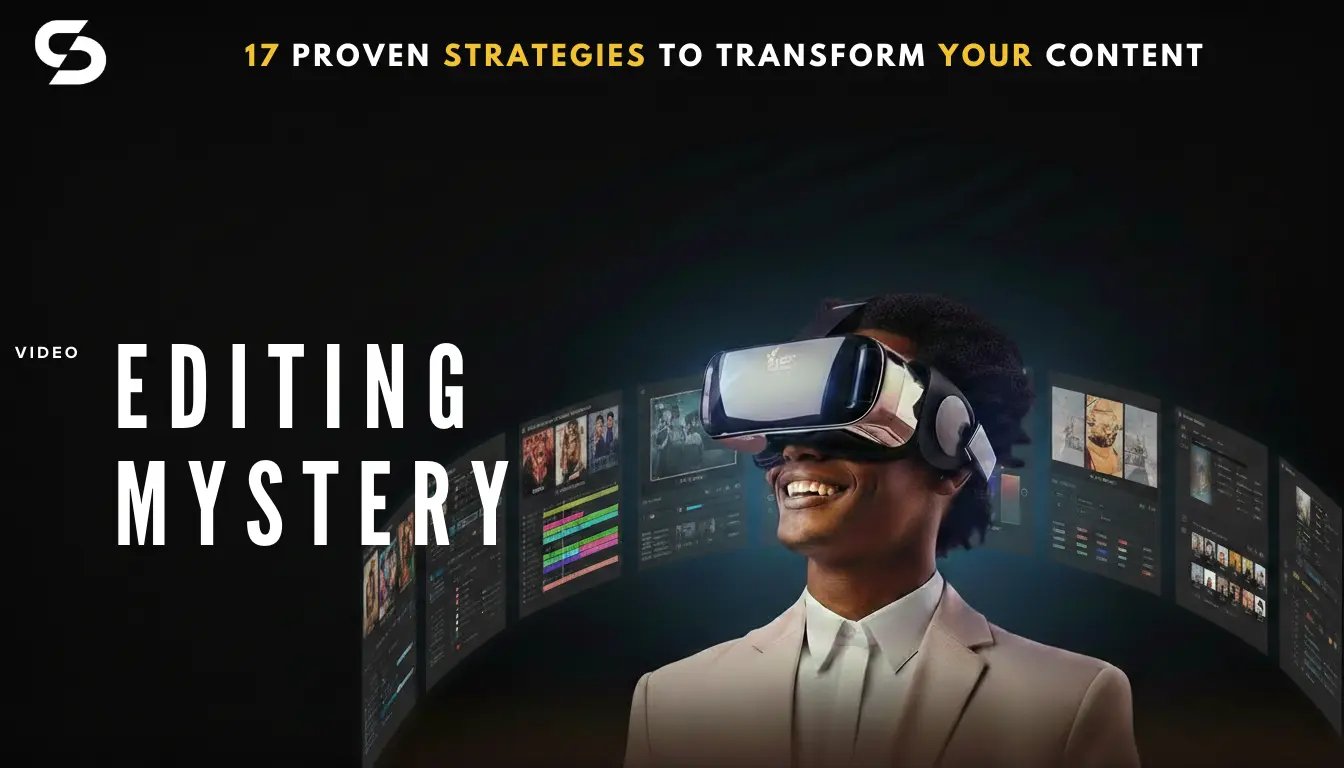
Video Editing Mastery: 17 Proven Strategies to Transform Your Content
Video Editing mastery guide covering 17 proven strategies to improve storytelling, boost engagement, and elevate your content quality for professional results.
BLOGS
Introduction to Video Editing
Video Editing is the art and science of arranging video clips to tell a clear and engaging story. In today’s digital world, Video Editing is no longer optional. It’s essential. Whether you’re creating YouTube content, marketing campaigns, online courses, or short-form social media videos, strong Video Editing determines how your audience feels, reacts, and remembers your message.
At its core, Video Editing involves cutting, trimming, arranging footage, adding sound, applying transitions, and enhancing visuals. However, modern Video Editing goes beyond simple cuts. It shapes perception, drives emotion, and builds brand identity.
Over the last decade, Video Editing has evolved rapidly. From expensive studio equipment to accessible mobile apps, the tools are now available to almost anyone. Platforms like YouTube and TikTok have made video the dominant form of content online. According to industry reports from sources like HubSpot (https://www.hubspot.com/marketing-statistics), video remains one of the highest-performing content types for engagement and conversion.
Simply put, Video Editing is the backbone of digital communication.
Why Video Editing Matters More Than Ever
The digital landscape is crowded. Every day, millions of videos are uploaded across platforms. Without effective Video Editing, your content gets lost in the noise.
Here’s why Video Editing is more important than ever:
Attention spans are shorter. Viewers decide within seconds whether to continue watching.
Competition is intense. High-quality visuals are now the standard.
Brand perception depends on quality. Poor editing can damage credibility.
Algorithms reward engagement. Well-edited videos increase watch time.
In marketing and branding, Video Editing plays a strategic role. It influences viewer retention, emotional response, and even purchase decisions. A well-edited video feels professional and trustworthy. On the other hand, poorly structured content feels confusing and amateur.
Furthermore, Video Editing helps shape storytelling. It allows creators to control pacing, highlight key points, and guide viewers step-by-step. Without proper editing, even great footage can fail.
Essential Video Editing Tools
Choosing the right tools can make or break your workflow. Video Editing software ranges from beginner-friendly platforms to advanced professional suites.
Professional Software Options
Adobe Premiere Pro – Industry standard with advanced capabilities.
Final Cut Pro – Popular among Mac users.
DaVinci Resolve – Excellent for color grading and post-production.
These tools provide full control over Video Editing, including advanced effects, multi-camera editing, and sound mixing.
Beginner-Friendly Tools
CapCut
iMovie
Canva Video Editor
These platforms simplify Video Editing while still offering essential features like trimming, transitions, and text overlays.
The key is to choose software that matches your skill level and goals.
Understanding Video Editing Basics
Before mastering advanced techniques, you must understand the fundamentals of Video Editing.
1. Cutting and Trimming
Remove unnecessary footage. Keep only what adds value.
2. Transitions
Use smooth transitions. Avoid overusing flashy effects.
3. Pacing
Control the speed of your content. Fast cuts create energy. Slower pacing builds emotion.
4. Audio Synchronization
Ensure sound aligns perfectly with visuals.
These basics form the foundation of professional Video Editing.
17 Proven Video Editing Strategies
Strategy 1–5: Core Foundations
Start with a strong hook.
Cut ruthlessly—remove filler words.
Use jump cuts strategically.
Add background music for emotion.
Maintain consistent branding.
Strategy 6–10: Visual Enhancement
Apply subtle color grading.
Use text overlays for clarity.
Optimize aspect ratios per platform.
Add motion graphics sparingly.
Balance brightness and contrast.
Strategy 11–17: Advanced Growth Techniques
Enhance audio clarity.
Use B-roll effectively.
Apply storytelling frameworks.
Optimize video titles and thumbnails.
Include captions for accessibility.
Test multiple versions.
Export in the highest suitable quality.
Each strategy strengthens your overall Video Editing process.
The Role of Storytelling in Video Editing
Storytelling transforms raw footage into a meaningful experience. Video Editing allows creators to:
Control emotional pacing
Highlight key moments
Build suspense
Deliver impactful endings
Without storytelling, videos feel random. With structured editing, they become memorable.
Color Grading and Visual Aesthetics
Color grading is a powerful Video Editing technique. It enhances mood and professionalism.
Warm tones create comfort. Cool tones create seriousness. High contrast adds drama.
Consistency in color builds brand identity.
Audio Enhancement Techniques
Many creators overlook sound. However, Video Editing includes:
Noise reduction
Equalization
Volume balancing
Background music layering
Clear audio increases viewer trust and retention.
Video Editing for Different Platforms
Different platforms require different Video Editing strategies:
Platform
Ideal Format
Style
YouTube
16:9
Informative, long-form
TikTok
9:16
Fast-paced, engaging
1:1 or 9:16
Visually dynamic
Always adapt your Video Editing approach to platform requirements.
Common Video Editing Mistakes
Avoid these common errors:
Overusing transitions
Ignoring audio quality
Adding too many effects
Poor pacing
Skipping subtitles
Professional Video Editing is clean, intentional, and structured.
Video Editing Workflow for Professionals
A streamlined workflow improves productivity:
Import footage
Organize files
Rough cut
Fine cut
Add audio
Apply color grading
Export and review
This structured Video Editing process saves time and reduces stress.
Future Trends in Video Editing
Video Editing is evolving with AI automation, cloud collaboration, and real-time rendering. AI tools now assist in:
Automatic captions
Scene detection
Smart cuts
Background removal
The future of Video Editing looks faster and more efficient than ever.
Frequently Asked Questions (FAQs)
1. What is Video Editing?
Video Editing is the process of arranging and enhancing video clips to create a finished production.
2. Which software is best for beginners?
CapCut and iMovie are excellent starting points.
3. How long does it take to learn Video Editing?
Basic skills can be learned in weeks, while mastery may take years.
4. Is Video Editing a good career?
Yes. Demand is growing across marketing, media, and content creation.
5. What computer specs are needed?
At least 16GB RAM and a strong GPU are recommended.
6. How important is audio in Video Editing?
Extremely important. Poor audio reduces credibility.
Conclusion
Video Editing is more than a technical skill. It’s a powerful communication tool. When done correctly, it builds trust, boosts engagement, and drives results.
By applying these 17 proven strategies, mastering storytelling, improving audio, and adapting to platforms, you can transform your content from average to exceptional.
Start small. Practice daily. Improve consistently. With dedication, Video Editing can become your strongest creative advantage.
You can also read about :
Media Buying Secrets: 21 Proven Strategies for Explosive ROI
Marketing Strategy for Sustainable Growth: Building a Winning, Smart Market Strategy

GET in touch
2026 Spark Marketing All rights reserved.©
sPARK mARKETING