
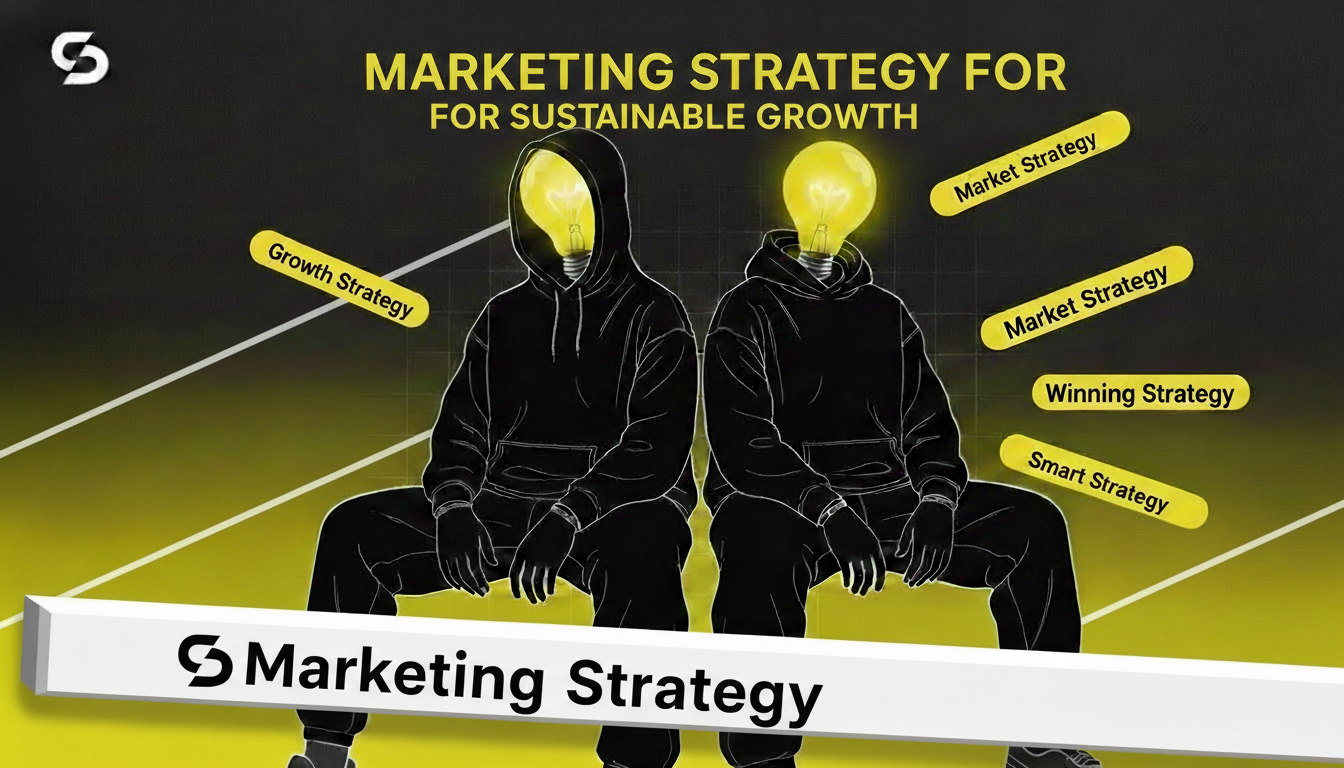
Marketing Strategy for Sustainable Growth: Building a Winning, Smart Market Strategy
Marketing strategy is the foundation of sustainable business growth. It combines growth strategy and market strategy to help brands understand where to compete and how to win. Through strategic marketing, businesses align their goals, customers, and value propositions into a smart strategy that drives long-term success.
BLOGS
Introduction: Marketing Strategy as a Growth Engine
A strong marketing strategy is no longer about promotion alone. Today, it’s a growth engine—one that aligns vision, market understanding, customer value, and execution into a single, winning system. Companies that grow consistently don’t rely on tactics; they rely on strategic marketing that guides every decision.
Growth doesn’t happen by accident. It’s designed.
This article explores how businesses can build a growth strategy using smart market insights, strategic thinking, and a clear path to long-term success—without relying on media buying.
What Is a Growth Strategy in Marketing?
A growth strategy is a structured plan that outlines how a business will expand its revenue, customer base, market share, or brand influence over time.
In marketing, growth strategy focuses on:
Creating real customer value
Identifying scalable opportunities
Strengthening competitive positioning
Building systems that support long-term success
Unlike short-term campaigns, growth strategy looks forward. It answers one critical question:
How will this business grow predictably and sustainably?
Market Strategy: Understanding Where to Compete
A market strategy defines where and how a brand competes. It’s built on deep market understanding, not assumptions.
Key Elements of a Strong Market Strategy
Target Market Definition
Clearly define who the ideal customer is—and who they are not.Market Segmentation
Divide the market into meaningful segments based on needs, behavior, or value.Competitive Positioning
Decide how the brand will stand out in the market.Value Proposition
Clarify why customers should choose you over alternatives.
A smart market strategy reduces wasted effort and focuses resources where growth is most likely.
Strategic Marketing: From Tactics to Direction
Strategic marketing is the discipline of aligning marketing actions with business goals. It shifts the focus from what to do next to why it matters.
Strategic Marketing Focuses On:
Long-term objectives, not short-term wins
Customer lifetime value, not single transactions
Brand equity, not just visibility
Consistent positioning across all touchpoints
When marketing becomes strategic, every action supports growth—not noise.
Winning Strategy: How Successful Brands Think
A winning strategy isn’t about doing everything. It’s about doing the right things better than competitors.
Characteristics of a Winning Marketing Strategy
Clarity: Everyone understands the direction
Focus: Resources are concentrated, not scattered
Consistency: Messaging and experience align over time
Adaptability: Strategy evolves with market changes
Winning brands don’t chase trends. They build systems that adapt while staying true to their core positioning.
Smart Strategy: Making Better Decisions with Less Waste
A smart strategy is grounded in insight, not intuition. It prioritizes learning, testing, and refinement.
What Makes a Strategy “Smart”?
Data-informed decisions
Clear success metrics
Feedback loops from customers
Continuous improvement
Smart strategies don’t aim for perfection. They aim for progress.
Growth Strategy Frameworks That Actually Work
Here are proven strategic approaches used by high-growth companies:
1. Market Penetration
Grow by increasing usage or loyalty among existing customers.
2. Market Expansion
Enter new geographic or demographic markets.
3. Product or Service Expansion
Offer new solutions to existing customers.
4. Brand-Led Growth
Build trust and emotional connection to drive organic demand.
Each approach requires a different strategic focus—but all rely on strong marketing foundations.
Aligning Marketing Strategy with Business Goals
Marketing strategy must support the broader business vision.
Alignment Happens When:
Marketing goals mirror business objectives
Teams share the same success metrics
Strategy guides execution, not the other way around
When alignment is strong, growth becomes scalable and sustainable.
Common Strategic Mistakes That Limit Growth
Even good companies struggle with growth due to avoidable mistakes:
Confusing tactics with strategy
Targeting everyone instead of someone
Ignoring customer feedback
Changing direction too often
Measuring the wrong outcomes
Avoiding these mistakes is often the fastest path to smarter growth.
Measuring Growth the Strategic Way
Growth strategy needs meaningful measurement.
Strategic Growth Metrics Include:
Customer lifetime value (CLV)
Retention and loyalty rates
Brand preference and trust
Market share growth
These metrics reflect long-term health, not just short-term activity.
The Future of Marketing Strategy and Growth
Modern growth strategies are:
Customer-centric
Experience-driven
Insight-led
Long-term focused
Brands that invest in strategic marketing today build advantages that competitors struggle to copy tomorrow.
Conclusion: Strategy Is the Real Competitive Advantage
A powerful marketing strategy connects growth strategy, market strategy, strategic marketing, and smart decision-making into one unified direction.
Growth isn’t about doing more.
It’s about doing what matters—consistently, intelligently, and strategically.
That’s how winning brands are built.
Media buying isn’t just about purchasing ad space anymore. These days, it’s a mix of data, psychology, creativity, and sharp decision-making. Businesses that master media buying don’t just get traffic—they get results. And honestly, that’s what everyone’s chasing.
In the first 10% of this article, let’s be crystal clear: media buying is the engine behind scalable growth in digital marketing. Whether you’re a startup, an agency, or a global brand, the way you buy media can make or break your ROI.
This guide is built to walk you through media buying from A to Z—without fluff, without jargon overload, and with real value you can actually use.
The Evolution of Media Buying
What Media Buying Really Means Today
Back in the day, media buying meant calling a TV station, negotiating a price, and hoping for the best. Today? It’s a whole different game.
Modern media buying is:
Data-driven
Audience-focused
Automated (in many cases)
Performance-obsessed
Instead of guessing, media buyers now rely on real-time analytics, AI-powered bidding, and laser-focused targeting. In other words, it’s smarter, faster, and way more competitive.
Why Media Buying Still Matters in 2026
Some people think organic traffic is enough. Spoiler alert: it’s not.
Paid media gives you:
Immediate visibility
Predictable scaling
Controlled testing environments
Even with algorithm changes and rising costs, media buying remains one of the most reliable ways to grow—if you do it right.
Types of Media Buying Models
Understanding the different media buying models is crucial before spending a single dollar.
Direct Buying
This is the old-school, relationship-based approach.
You negotiate directly with publishers
Fixed placements and pricing
Best for brand awareness campaigns
It’s simple, but not always flexible.
Programmatic Buying
Programmatic media buying uses automated systems to purchase ad inventory in real time.
Key benefits:
Real-time bidding (RTB)
Advanced audience targeting
Massive scale
Platforms like Google Display & Video 360 dominate this space, and for good reason.
Performance-Based Media Buying
Here, you pay for results—clicks, leads, or sales.
This model is ideal if:
You care about ROI above all
You track conversions accurately
You optimize continuously
It’s aggressive, efficient, and unforgiving if your funnel is weak.
Core Media Buying Channels
Social Media Platforms
Social media is a goldmine for media buying.
Top platforms include:
Facebook & Instagram
TikTok
LinkedIn
X (Twitter)
Each platform has unique audience behavior, so strategies must adapt. What works on TikTok may flop on LinkedIn—and that’s okay.
Search Engines
Search-based media buying captures intent.
Advantages:
High conversion potential
Keyword-level control
Strong performance tracking
Google Ads still leads the pack, but alternatives like Bing Ads can offer cheaper CPCs.
Display and Native Advertising
Display ads build awareness, while native ads blend seamlessly with content.
Used correctly, they:
Support retargeting strategies
Reinforce brand recall
Warm up cold audiences
For deeper insights on native advertising, check out resources from HubSpot .
Media Buying Strategy Framework
A solid strategy separates amateurs from pros.
Audience Research and Targeting
If you don’t know your audience, you’re burning money.
Smart media buyers:
Build buyer personas
Use first-party data
Segment audiences aggressively
The more specific you get, the better your results.
Budget Planning and Allocation
Don’t spread your budget too thin.
Instead:
Test with small budgets
Scale what works
Cut losers fast
Media buying rewards decisiveness.
Creative Testing and Optimization
Creatives drive performance. Period.
Best practices include:
A/B testing headlines
Rotating visuals
Testing hooks and CTAs
Even a small creative tweak can double your ROI.
Tools and Platforms for Media Buyers
DSPs and Ad Networks
Demand-Side Platforms (DSPs) allow centralized buying across channels.
Popular options:
Google DV360
The Trade Desk
Amazon DSP
They’re powerful—but only if you know how to use them.
Analytics and Tracking Tools
Data is your compass.
Essential tools include:
Google Analytics 4
Meta Ads Manager
Third-party trackers
Without clean data, media buying becomes guesswork.
Common Media Buying Mistakes
Poor Targeting
Broad targeting feels safe, but it’s expensive.
Mistakes include:
Ignoring exclusions
Overlapping audiences
Chasing volume over quality
Precision always wins.
Ignoring Data Signals
If the data says stop, stop.
Too many media buyers:
Ignore frequency fatigue
Scale too early
Trust gut feelings over numbers
Data doesn’t lie.
Measuring Media Buying Success
KPIs That Actually Matter
Vanity metrics won’t pay the bills.
Focus on:
ROAS
CPA
LTV
Everything else is supporting data.
Attribution Models
Attribution shows how conversions happen.
Common models:
Last-click
First-click
Data-driven
Choose one that aligns with your funnel, not just convenience.
Media Buying vs Media Planning
Media planning defines what and where.
Media buying executes the how and how much.
They’re different—but inseparable.
Strong planning makes buying easier. Strong buying validates planning.
Media Buying for Small Businesses
You don’t need a massive budget to win.
Small businesses should:
Start with one channel
Focus on local or niche targeting
Optimize weekly
Consistency beats size every time.
Future Trends in Media Buying
The future looks bold.
Expect:
More AI-driven optimization
Privacy-first targeting
Increased first-party data usage
Media buying isn’t dying—it’s evolving.
At Spark Marketing, media buying isn’t just theory—it’s proven execution. Through our portfolio, we’ve managed and optimized campaigns across multiple industries, channels, and budgets, delivering consistent ROI through data-driven media buying strategies. Every insight shared in this guide reflects real-world experience, tested frameworks, and performance results drawn directly from our portfolio of successful advertising campaigns.
Frequently Asked Questions (FAQs)
What is media buying in simple terms?
Media buying is the process of purchasing advertising space to promote products or services to a targeted audience.
Is media buying expensive?
It can be, but smart strategy and testing help control costs and improve ROI.
What skills does a media buyer need?
Data analysis, audience research, creativity, and decision-making are essential.
Is programmatic media buying better than direct buying?
Not always. Programmatic offers scale and automation, while direct buying offers control and premium placements.
Can beginners learn media buying?
Absolutely. With the right tools and practice, anyone can start and improve quickly.
How long does it take to see results?
Some campaigns show results within days, while others take weeks of optimization.

GET in touch
2026 Spark Marketing All rights reserved.©
sPARK mARKETING